The ultimate SEO strategy template: a roadmap for real results
On this page
Want to get real results from your website but not sure where to start with SEO? You’re not alone. A well-structured SEO strategy template can cut through the clutter, giving you a clear roadmap to higher rankings, more traffic, and better conversions. Whether you’re a small business owner, a marketer, or a content creator, this guide will help you build a winning SEO plan step by step.
Let’s dive in!
SEO strategy template
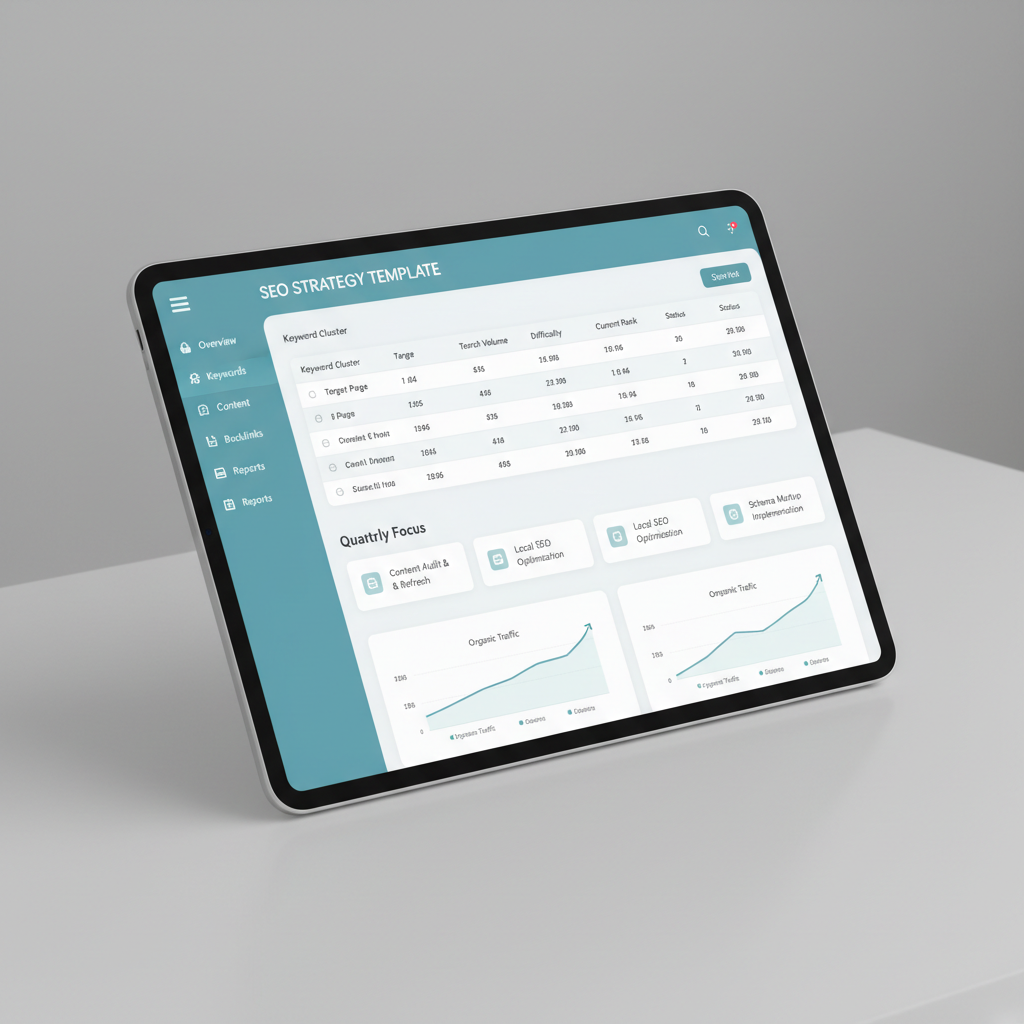
A solid SEO strategy template acts as your blueprint for boosting your site’s visibility on Google search. Whether you manage a content site or work with Shopify SEO experts to maximize store rankings, it organizes every major task, from keyword research to technical SEO, content planning, and link building. Here’s a high-level look at what a practical template covers:
We’ll break down each section in detail, with actionable examples and templates you can use right away.
What is an SEO strategy?
An SEO strategy is a structured plan for improving your website’s organic search visibility. It’s more than just using keywords, it’s about understanding your audience, optimizing your site, creating valuable content, and building authority through high-quality backlinks.
Think of your SEO strategy as a living document. It should adapt as your business, audience, and the algorithms change.
Why you need an SEO roadmap template
SEO success rarely happens by accident. An SEO roadmap template provides:
-
Clarity: You know what to do and when.
-
Focus: Prioritize tasks that drive results (not just busywork).
-
Accountability: Assign owners and deadlines to every step.
-
Scalability: Easily repeat or delegate processes as your team grows.
Without a roadmap, it’s easy to get lost in endless keyword research or technical SEO tasks without seeing real progress.
Key elements of a winning SEO strategy
Your SEO strategy template should cover these core elements:
-
Understanding your audience and their search intent
-
Conducting keyword research using reliable tools
-
Optimizing your site’s technical SEO
-
Creating valuable, conversion-focused content
-
Building high-quality backlinks
-
Tracking, measuring, and refining your approach
Let’s break each one down.
Understanding search intent and google search
Before you write or optimize anything, get clear on search intent. This means understanding the “why” behind a search query:
-
Informational: Looking for answers or how-tos (“how to tie a tie”)
-
Navigational: Trying to reach a specific site (“Seobase login”)
-
Transactional: Ready to buy or take action (“buy running shoes online”)
-
Commercial investigation: Comparing options (“best keyword research tools”)
Google search rewards pages that best match user intent. Review the top results for your target keywords. What formats, topics, and angles do they use? Use this insight to shape your own content.
Keyword research: laying the foundation
Keyword research is the backbone of any SEO strategy. It reveals what your audience is searching for and how competitive those terms are.
Steps for effective keyword research:
-
Brainstorm seed topics relevant to your business.
-
Use keyword research tools (like Seobase, Google Keyword Planner, or Ahrefs) to expand your list.
-
Analyze search volume, keyword difficulty, and intent.
-
Group keywords into clusters or themes for content planning.
How to use a keyword research template
A keyword research template helps you organize and prioritize your findings. Here’s a simple example:
Tips:
-
Focus on a mix of high-volume and low-competition keywords.
-
Note search intent for each term.
-
Track current rankings to measure progress.
Choosing the right keyword research tools
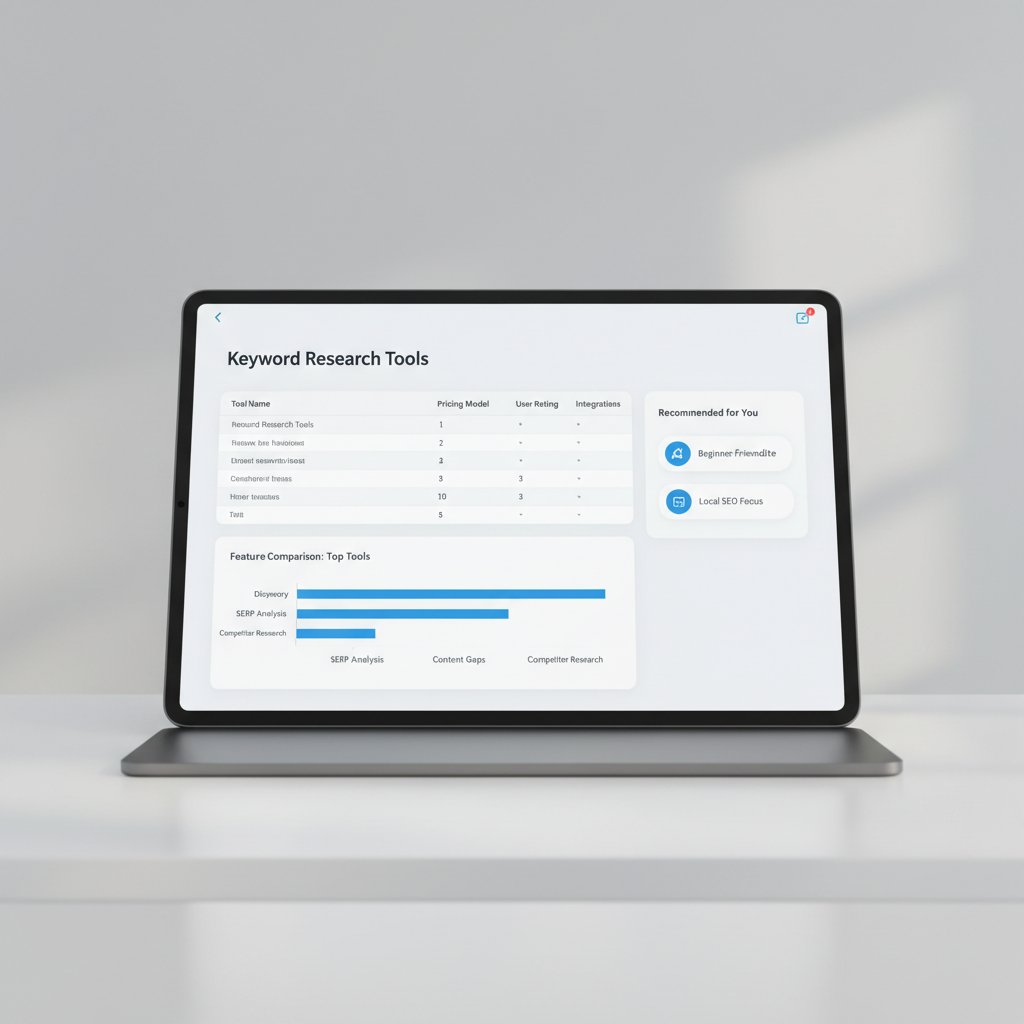
Not all keyword research tools are created equal. Here’s a quick comparison of popular options:
Actionable tip: Start with Seobase for automated keyword research and content planning, then supplement with Google Keyword Planner for additional data.
Technical SEO tasks to prioritize
Technical SEO ensures your site is crawlable, fast, and secure. Here are key technical SEO tasks to include in your template:
-
Crawlability: Submit an XML sitemap, fix broken links, and use robots.txt wisely.
-
Site Speed: Compress images, use caching, and minimize code.
-
Mobile Optimization: Ensure responsive design and fast mobile load times.
-
HTTPS: Secure your site with an SSL certificate.
-
Structured Data: Add schema markup for rich results.
-
Fix duplicate content: Use canonical tags and avoid thin pages.
Pro tip: Use Seobase or Google Search Console to audit your site and prioritize technical SEO tasks.
On-page SEO: optimizing for conversion rate
On-page SEO is about aligning your content with both search engines and users. Beyond finding high-intent keywords using keyword tools (as seen in our Ahrefs vs KWFinder comparison), you need to optimize for conversion rate—a essential focus whether you manage optimization yourself or partner with an SEO agency for startups.
Core on-page SEO tactics:
-
Title tags and meta descriptions: Make them compelling and keyword-rich.
-
Headings (H1, H2, H3): Organize content for readability and SEO.
-
Internal linking: Guide users (and Google) to high-value pages.
-
Clear CTAs: Every page should have a goal, whether it’s a signup, download, or purchase.
-
Fast loading times & tracking: Improve user experience, reduce bounce rates, and streamline workflow by learning how to automate SEO reports to clients.
Example: If your page targets “seo strategy template,” include the phrase naturally in the title, intro, and at least one subheading. Add a CTA to download your template.
Content planning with an SEO roadmap template
A content calendar is your SEO roadmap in action. It helps you:
-
Map keywords to topics and formats
-
Schedule publishing for consistency
-
Assign owners and deadlines
Sample content calendar table:
Tip: Tools like Seobase can generate a content calendar automatically based on your keyword research.
Automating content creation and publishing
Manual content creation is time-consuming. Automation tools (like Seobase) streamline the process:
-
Keyword research: Automated suggestions and clustering
-
Content generation: AI-powered drafts and outlines
-
Editorial workflow: Assign, review, and approve in one place
-
CMS integration: Publish directly to WordPress, Shopify, and more
-
AI images and video embeds: Enhance content without extra tools
Actionable example: Use Seobase to generate a list of article ideas, draft AI-powered posts, and publish them to your CMS, all in a few clicks.
Building high-quality backlinks that matter
Backlinks are still a top ranking factor, but not all links are created equal. Focus on:
-
Relevance: Target sites in your niche or industry
-
Authority: Prioritize high-authority domains
-
Diversity: Get links from different sources (blogs, news, directories)
Tactics for building high-quality backlinks:
-
Guest posting on relevant blogs
-
Resource page outreach
-
Unlinked brand mentions
-
Backlink exchange with trusted partners (see next section)
Track your backlinks using tools like Seobase or Ahrefs.
Backlink exchange: efficient outreach tactics
Backlink exchange can be an efficient way to build authority, if done correctly:
-
Identify potential partners using Seobase’s backlink exchange feature.
-
Personalize your outreach. Reference their content and explain the mutual benefit.
-
Suggest specific pages to link to, making it easy for them.
-
Maintain quality. Only exchange with sites that add value and are relevant to your niche.
Example outreach template:
Hi [Name],
I enjoyed your article on [Topic]. I think our resource on [Your Topic] would be a valuable addition for your readers. Would you be open to a backlink exchange?Let me know if you’re interested!
Tracking and measuring SEO success
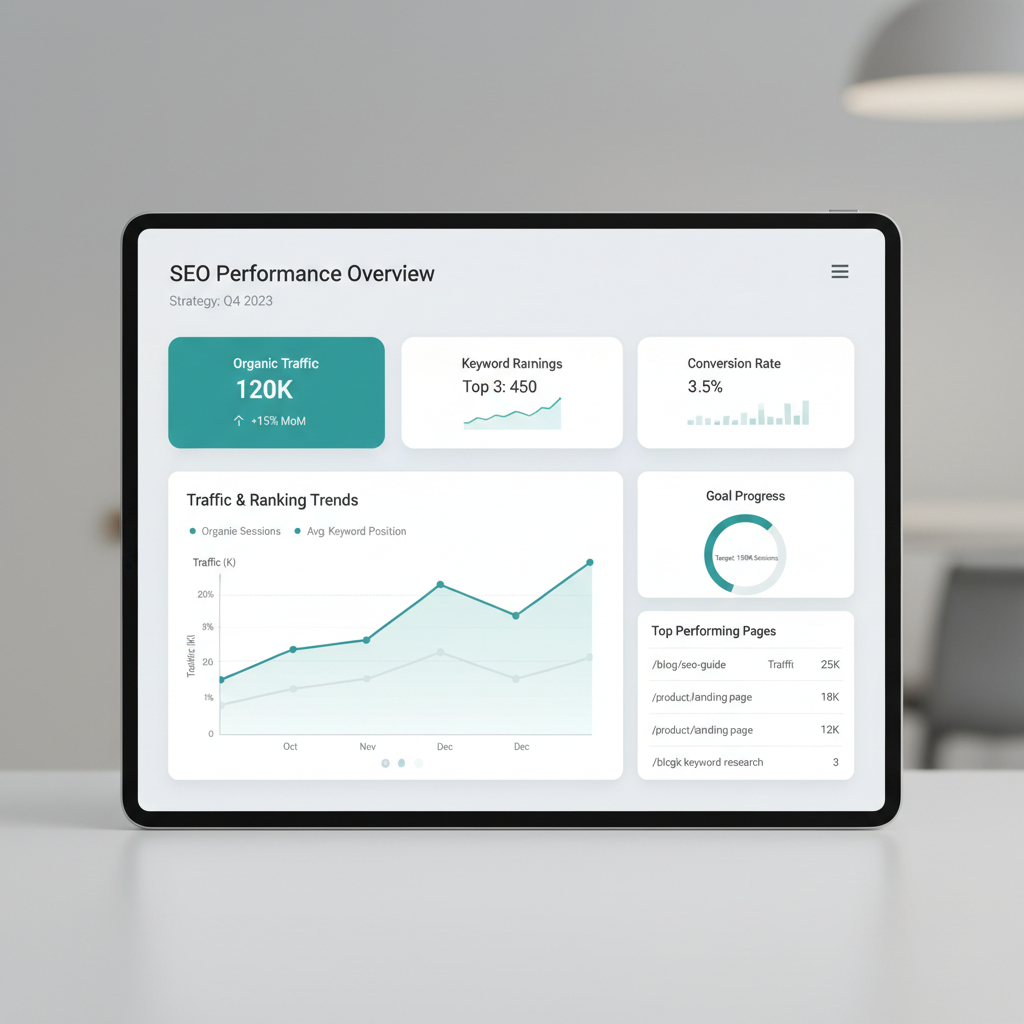
What gets measured gets managed. Key metrics to track:
-
Organic traffic (Google Analytics)
-
Keyword rankings (Seobase, Ahrefs, SEMrush)
-
Backlink profile (number and quality)
-
Conversion rate (signups, purchases, downloads)
-
Bounce rate and time on page
Set up monthly reporting to review what’s working and scale your strategy with semantic SEO automation to continuously refine content relevance.
Tip: Use Seobase’s unified dashboard to view all your SEO data in one place.
Common SEO strategy mistakes to avoid
Even the best SEO roadmap template can go off track. Watch out for these pitfalls:
-
Ignoring search intent: Don’t just target keywords, address the “why.”
-
Over-optimizing: Keyword stuffing or excessive link building can backfire.
-
Neglecting technical SEO: Slow or broken sites hurt rankings.
-
Inconsistent content publishing: Sporadic posts won’t build authority.
-
Not measuring results: Without tracking, you can’t improve.
Stay agile and refine your strategy as you learn what works.
How Seobase simplifies your SEO workflow
Seobase takes the heavy lifting out of SEO by automating your core tasks:
-
Automated keyword research: Find the best opportunities fast
-
Content calendar generation: Map out posts for consistent publishing
-
AI article writing: Draft high-quality content in minutes
-
CMS publishing integrations: Push content live with one click
-
Backlink exchange: Build high-quality backlinks efficiently
-
Review mode and approval workflow: Keep teams aligned
Why it matters: You spend less time on manual research and coordination, and more time growing your organic traffic.
Download your free SEO strategy template
Ready to get started? Here’s a free SEO strategy template you can copy and adapt for your own business.
Pro tip: Import this template into your favorite project management tool or use it within Seobase for seamless automation.
Start building your SEO strategy with Seobase
You don’t need to juggle a dozen tools or guess what to do next. Seobase gives you everything you need to:
-
Discover high-potential keywords with minimal effort
-
Build and execute a content plan that aligns with search intent
-
Automate article writing and publishing to your CMS
-
Exchange backlinks with reputable partners
-
Track results and optimize for better conversion rates
Whether you’re just getting started or looking to scale, Seobase is your all-in-one SEO automation platform.
Conclusion
Building an effective SEO strategy doesn’t have to be overwhelming. With a clear SEO strategy template, smart keyword research, technical SEO, and a focus on high-quality backlinks, you can create a roadmap for real, measurable results.
Remember: SEO is a marathon, not a sprint. Stay consistent, keep learning, and use tools like Seobase to make your workflow easier, faster, and more effective.
Next step
Ready to get real results? Start your free trial with Seobase and automate your entire SEO workflow today!
Related reading
- Find backlinks in google: step-by-step methods for 2026
- How to add meta keywords in wordpress: step-by-step guide
- The ultimate SEO plan template: streamline your strategy with ease