
Meta Title: How to Choose an SEO Article Writing Service in 2026 (55 characters)
Meta Description: Learn how to select an SEO article writing service that builds real search authority, automates publishing, and scales organic traffic. (137 characters)
How to choose an SEO article writing service in 2026
Choosing an SEO article writing service used to mean buying mass-produced blog posts loaded with keywords. That model is dead. Modern search engines and search-focused LLMs favor detailed content built for real people. Today, successful teams hire partners that match clear search intent, provide total workflow transparency, and build real authority across your full customer funnel.
Outsourcing your search strategy works best when your writing team moves past generic drafts. You need clear systems, accountable writers, and measurable performance instead of empty promises.
On this page
- Evaluating pricing models and agency deliverable packages
- Standard workflow from briefing to CMS publishing
- Integrating technical seo elements into written content
- Vetting writer pools and managing revision policies
- Automating article generation and publishing with Seobase
- Selecting your ultimate content execution strategy
TL;DR: An SEO article writing service plans, writes, and optimizes website articles to rank on search engines and capture target traffic. In 2026, leading providers range from traditional human agencies to automated platforms like Seobase, which combine AI drafting with direct CMS publishing, keyword research, and backlink management.
Evaluating pricing models and agency deliverable packages

Content agencies and freelancers charge in several different ways. Understanding these pricing models helps you pick an option that fits your content budget and production targets.
| Pricing Model | Average Cost Range | Best For | Typical Deliverables |
|---|---|---|---|
| Per-Word Billing | $0.05, $0.35 / word | One-off articles, irregular posting | Raw article text, basic keyword placement |
| Fixed Per-Article | $250, $1,500 / post | Medium-volume blogs | Brief creation, writing, basic editing, images |
| Flat Monthly Retainers | $3,000, $10,000 / month | High-growth organic campaigns | Strategy, briefing, writing, CMS publishing, link insertion |
Here is how common package options break down in practice:
- Per-word billing: You pay only for the exact word count written. Rates often start around $0.15 per word for standard technical writing. This model works well for occasional posts, but costs can jump quickly on long guides.
- Flat retainers: A fixed plan like $5,000 per month covers a set monthly output, such as eight 2,000-word articles. Retainers usually include strategy, keyword research, editing, and CMS publishing.
- Flat monthly retainers: (named plan/concept)
- $0.15 per word (number/price)
- 2,000-word (number)
- $5,000 per month (number/price)
- Per-word billing: (short colon-terminated label)
- Flat retainers: (short colon- Inspiring blog post examples to spark your next big idea covers this in more depth.
Choosing between per-word rates and monthly retainers depends on your team capacity. If you have an in-house editor who builds briefs and publishes posts, per-word freelancers might save you money. If you need an end-to-end partner who handles everything from keyword research to publishing, a managed service or an automated platform like Seobase delivers better efficiency.
Standard workflow from briefing to CMS publishing
High search rankings come from a disciplined editorial system, not lucky guesses. When you manage active organic campaigns, skipped steps mean missed traffic and wasted budget.

1. Onboarding and positioning
Every successful project begins with an onboarding questionnaire detailing brand voice and target audience. This step captures your core product nuances, tone requirements, and customer pain points. Getting these details upfront keeps writers aligned with your business goals right from day one Free SEO Tools | Seobase covers this in more depth.
2. Search intent and keyword mapping
Before anyone writes a word, your team must identify the primary search intent behind each topic. Search intent falls into four main groups:
- Informational: Readers want answers or tutorials (e.g., “how to fix high churn”).
- Commercial: Readers compare solutions (e.g., “best SEO article writing service”).
- Transactional: Readers prepare to buy (e.g., “buy SEO platform subscription”).
- Navigational: Readers search for a specific brand page.
Matching your target keyword to the right search intent prevents ranking friction. A commercial query needs comparative tables and clear product details, while an informational query requires step-by-step instructions.
3. Content briefing and outline approval
A thorough brief acts as the blueprint for your article. Great briefs outline:
- Target primary and secondary keywords
- Headings (H2s and H3s) based on top-ranking competitors
- Core entities and semantic terms to include
- Target audience pain points and brand positioning requirements
- Recommended internal links to your existing product or feature pages
Approving detailed outlines before drafting saves hours of editing down the line. It ensures the writer hits every key topic requirement on the first pass.
4. Drafting and editorial review
During drafting, writers must focus on clear structure, active voice, and concrete examples. Once written, the draft passes through editorial checks to verify factual claims, remove fluff, check readability, and fix grammar issues.
Rigorous editorial review directly drives long-term search gains. Case studies show that disciplined content programs yield real results. For example, Brafton helped Quench USA grow from 14,500 to nearly 80,000 organic sessions per month by following a structured production system.
5. CMS staging and direct publishing
The final phase turns raw draft text into a published web page. This step includes:
- Formatting headers, bold text, and lists for web reading
- Sourcing relevant graphics or screenshots with descriptive alt text
- Setting SEO metadata (title tags and meta descriptions)
- Formatting URL slugs cleanly
- Uploading and scheduling the draft inside your CMS
Manual publishing takes up to 60 minutes per article. Top-tier providers streamline this by publishing directly to CMS platforms like WordPress, Webflow, Shopify, Framer, Wix, and Ghost.
Integrating technical SEO elements into written content
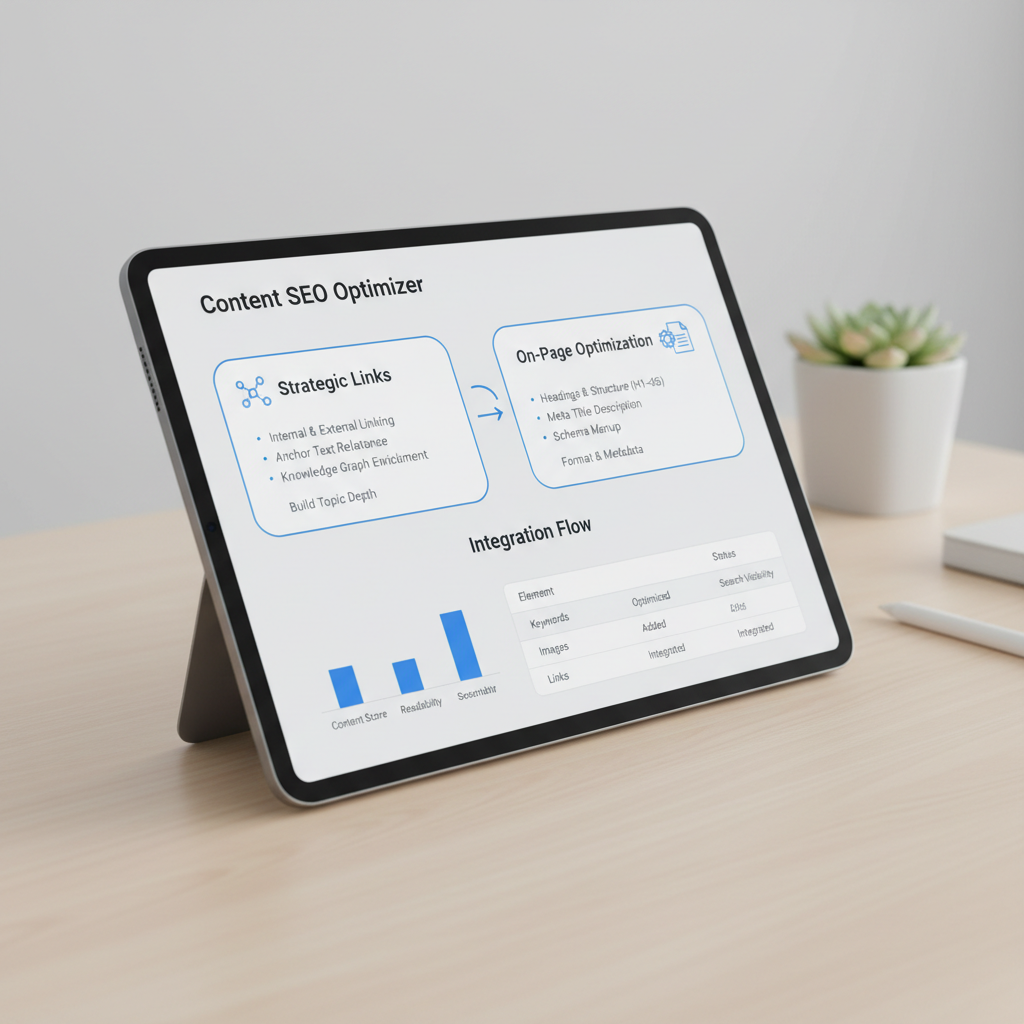
Technical SEO is not just a job for web developers. If your draft ignores site architecture and reader experience, even high-quality writing will stall on search engine results pages. You can build technical performance directly into your text before hitting publish.
Strategic links build topic depth
Smart internal linking maps clear pathways between your articles so search engine crawlers can index your site fast. Instead of dropping generic links at the end of a page, tie high-volume informational guides to commercial landing pages naturally inside the body text.
For instance, when writing a guide about content strategy, link relevant phrases directly to specialized tools like the Seobase platform features. This passes page authority across your site and keeps readers engaged longer.
Optimizing on-page formatting and metadata
Good formatting helps search crawlers and human readers scan your content quickly. Follow these core formatting practices:
- Use clean heading tags: Keep a strict hierarchy (one H1 for the page title, H2s for main sections, H3s for subsections).
- Write concise meta titles: Keep titles between 50 and 60 characters so search engines do not cut them off.
- Craft active meta descriptions: Summarize the value of the page within 120 to 160 characters.
- Optimize image alt text: Describe visual content using relevant terms without keyword stuffing.
- Include FAQ schema: Format frequent questions cleanly so search engines can pull them into rich snippets.
Vetting writer pools and managing revision policies
Finding writers who genuinely know your trade is tough. Access to niche-specific writer pools ensures accurate technical industry terminology without the fluff. When subject matter experts draft your pieces, you skip the painful back-and-forth of explaining basic concepts. They already know how your buyers talk, what problems they face, and how to cover complex topics naturally.
Managing edits requires firm boundaries. Establishing a clear revision policy early prevents endless dispute cycles during the review phase. Define what counts as a standard edit versus a full rewrite before any drafting begins.
Standard edits include minor phrasing tweaks, fixing typos, or adjusting heading phrasing. A full rewrite happens when a draft ignores the approved outline or misses key buyer details. If a piece strays from the agreed brief, the writer fixes it on their dime. If your team changes the strategic angle after submission, that warrants a scope adjustment. Strict boundaries keep projects moving on schedule.
Tracking results via a content performance dashboard validates long-term ROI across your publishing pipeline. Watching page performance over several months proves whether your investment yields real search growth. You can set up Google Search Console monitoring for SEO content to catch indexing delays and track keyword trajectory early. That clear data tells you exactly when to update older posts or double down on high-performing topics.
Skip the manual work. Seobase runs keyword research, briefs, drafting, internal linking, and publishing in one workflow, from first keyword to published post, without the busywork. Try Seobase →
Automating article generation and publishing with Seobase
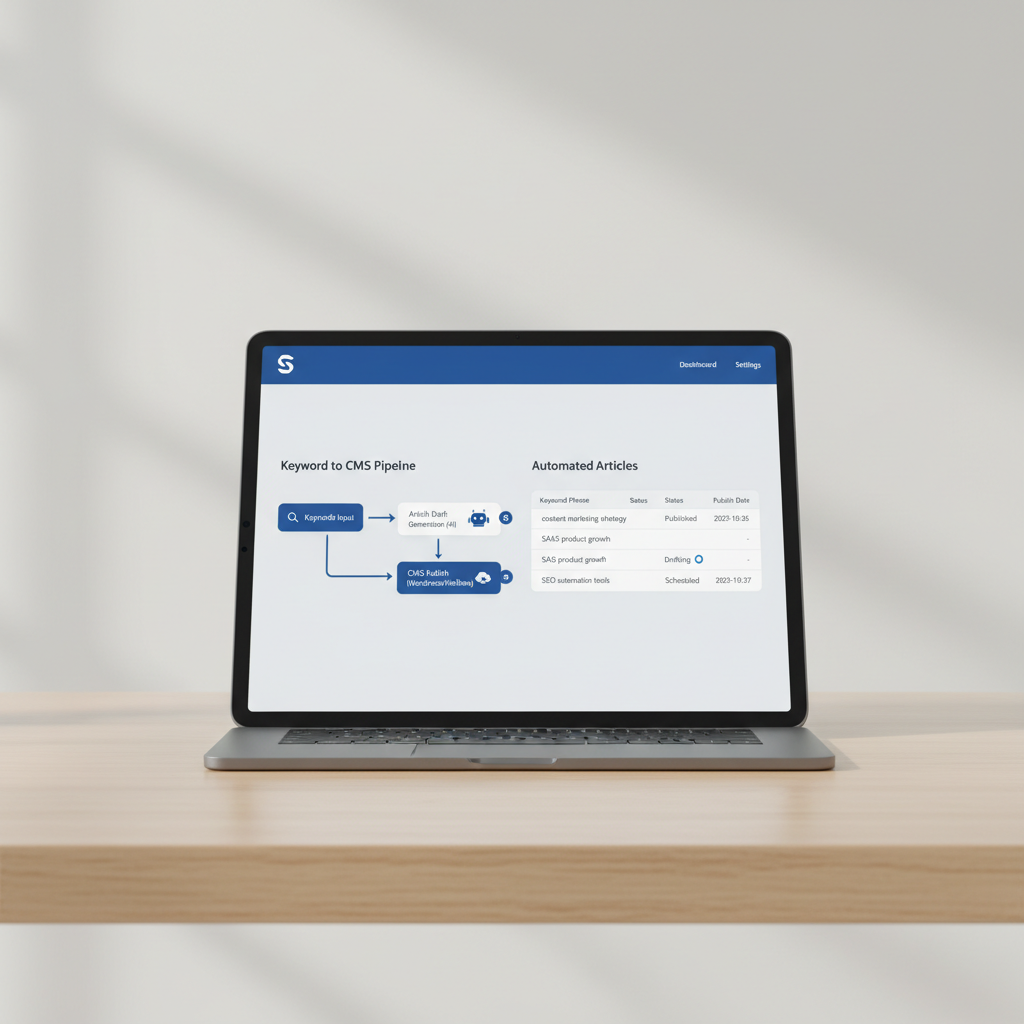
Managing traditional content teams manually slows your growth. You spend hours reviewing outlines, chasing late drafts, and watching customer acquisition costs climb. Monthly agency retainers frequently turn into empty promises when organic traffic flattens out.
Seobase fixes this bottleneck by running your entire publishing stack inside one interface.
A direct pipeline from keywords to CMS
First, the platform handles topic discovery and calendar creation automatically. You enter your core AI SEO Automation: How to Build a Search Engine That Compounds | Seobase covers this in more depth.
Instead of coordinating multiple tools and freelancers, automated platforms unify every step of content production:
- Automated Keyword Research: The engine finds low-competition, high-intent keywords tailored to your domain niche.
- Content Calendar Generation: Topics organize into logical content clusters to build site topical authority.
- AI Article Writing with Human Review: High-quality initial drafts generate instantly, complete with appropriate headers and subtopics.
- Media Enhancement: The system adds relevant visual assets, including custom AI image generation and embedded YouTube videos.
- Backlink Exchange Integration: Built-in backlink networks help your new articles gain referral links faster.
- Direct CMS Publishing: Finished pieces publish automatically to connected platforms like WordPress, Webflow, Shopify, Framer, Wix, or Ghost.
Automating these steps eliminates production delays and lets you scale your output without expanding your headcount. Check out Seobase pricing plans to see how automation lowers your content production costs.
Selecting your ultimate content execution strategy
Pick an execution strategy based on what your team can realistically support day-to-day. A small team with limited technical resources will stumble if they try to build a custom publishing engine, no matter how good the strategy looks on paper. Match your budget directly to your internal technical limits. If your in-house team lacks writing capacity, turning to a dedicated SEO article writing service keeps your content pipeline moving without burning out your staff.
Your operational setup must remain completely transparent. Every project needs a clear brief that defines keyword search intent, buyer funnel placement, and target backlinks before anyone begins draft work. You also need performance tracking tied directly to your workflow. Connecting your production
Leave a Reply